
The ultimate guide to AED maintenance
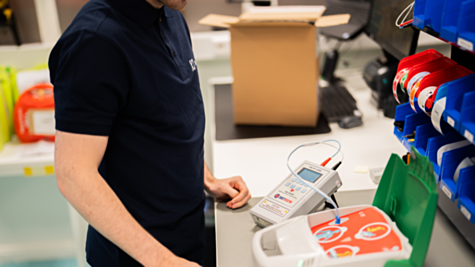
In emergency situations, a reliable Automated External Defibrillator (AED) can make all the difference. But simply having an AED is not enough; regular AED maintenance is essential to make sure the AED is ready to work when you need it most. In this guide, we cover everything you need to know about maintaining your AED, including inspecting your device, understanding status indicators and troubleshooting problems.
The importance of AED maintenance
AED maintenance is not just a good habit; it is essential for saving lives. Regular maintenance ensures that the device functions correctly during a resuscitation. Neglecting maintenance can lead to device failures, which, as you can imagine, can have serious consequences. It is also common for the expiration date of AED pads to pass, making them no longer suitable for use.
During resuscitation following a cardiac arrest, every second is critically important, so make sure your AED is always ready for use!
Regular AED check
Inspection is an important part of AED maintenance. By regularly inspecting your AED, you can identify potential problems before they become critical. Here is what you should check:
- Power supply: Keep a close eye on whether the battery capacity is sufficient. Unfortunately, not every AED indicates how much battery capacity remains. This is something you need to keep track of yourself. The lifespan of an AED battery varies between 2 and 7 years, depending on the type of AED. The lifespan starts when the battery is inserted into the AED. However, the battery life can be affected by various factors, such as use of the AED during an emergency. When the battery voltage is too low, the AED will notify you through a status indicator, such as a flashing light. On our website, you can find more information about the lifespan of AED batteries.
- Readiness of the pads: Check whether the pads are intact, properly sealed and have not expired.
- Hygiene: Keep the AED and its components clean and free from dust.
- AED status check: Check whether the device's status indicator shows that it is ready for use.
Understanding AED status indicators
AEDs are designed to perform regular self-tests and will warn you if there is a problem. Carefully read the manual to understand what the status lights on your defibrillator mean, as the information below does not apply to every AED, such as the DefiSign AED. During your AED check, pay attention to these indicators:
- Positive indicator, often a green (flashing) light: All systems are working! Your AED is ready for action.
- Negative indicator, often a red (flashing) light, possibly combined with beeping: There is a problem. The battery may be nearly empty, the pads may have expired or there may be another malfunction. Investigate immediately.
Ignoring these signals can lead to an AED malfunction at a critical moment, so always address warnings immediately. If your AED starts beeping or the light flashes red, this indicates that something is wrong. First, consult the user manual for troubleshooting steps specific to your model. Common problems include:
- Low battery: Replace the battery with a new one.
- Expired pads: Replace the pads immediately.
By addressing these problems promptly, you can keep your AED reliable and ready to save lives.
Troubleshooting AED malfunctions
Even with regular AED maintenance, malfunctions can occur. Here is how to deal with them:
- Resetting the device: Sometimes, a simple reset can resolve minor problems. Follow the manufacturer's instructions for resetting your AED.
- Professional inspection: If you cannot resolve the problem yourself, contact AEDExpert.ie or a certified service partner for a thorough inspection and repair. If you purchased your AED from Medisol, or if you have or are interested in an AED maintenance contract with Medisol, you can always contact one of our specialists to have your AED inspected.
Maintaining a properly functioning AED is essential to ensure that it works correctly in an emergency. Regular checks, understanding status indicators and resolving malfunctions are all part of a proper AED maintenance routine. By following these practices, you can be confident that your defibrillator is ready to provide life-saving assistance at any time.
Stay prepared with a maintenance plan from Medisol
AED maintenance is an essential part of owning this life-saving device. By regularly inspecting your AED, understanding warning signals and resolving malfunctions immediately, you can ensure that it is always ready for use in an emergency. Don't wait for a crisis to discover that your AED is not working properly. Stay proactive, stay prepared and make sure your AED is always in top condition.
Interested in professional AED maintenance? With a maintenance plan from Medisol, you don't have to worry about maintaining your AED. We recommend having your AED checked annually to ensure that your device is always in top condition and equipped with all software updates. Through the button below, you can access an overview of all maintenance plans and read exactly what they include, so you can choose the right plan for your situation.