
How to use a defibrillator
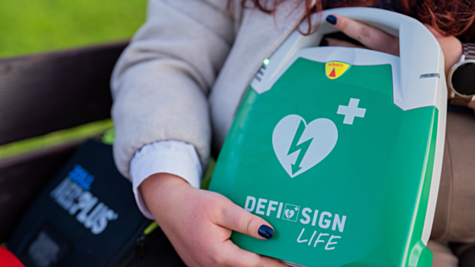
An AED, Automated External Defibrillator, is a portable device used during sudden cardiac arrest. The goal is simple: restore the heart rhythm as quickly as possible and increase the chance of survival.
Step by step explained
1. Turn on the AED
As soon as you open or switch on the AED, it starts automatically with clear voice instructions. You are guided step by step.
2. Apply the electrode pads
Place the electrode pads on the bare chest of the victim. The AED and the images on the pads clearly show where they should be placed.
3. Heart rhythm analysis
The AED automatically analyses the heart rhythm. You do not need to do anything and you cannot make a mistake during this step.
4. Shock advised or no shock
The AED will only advise a shock if it is necessary. If a shock is not needed, this will also be clearly stated.
5. Deliver the shock
With a semi automatic AED, you press the shock button when the AED instructs you to do so. With a fully automatic AED, the shock is delivered automatically.
6. Continue CPR
After the shock, or if no shock is needed, the AED guides you through chest compressions and rescue breaths.
Can you use an AED?
Yes. An AED is designed so that anyone can use it, even without a medical background. Thanks to voice prompts and built in safety checks, the device is safe and easy to operate. CPR training is recommended, but not mandatory.
What an AED does and does not do
Does
- Automatically analyses the heart rhythm
- Provides clear voice instructions
- Prevents unnecessary shocks
Does not
- Deliver a shock when it is not needed
- Replace CPR
Why speed is so important
During cardiac arrest, the chance of survival decreases by around 10 percent per minute without help. Acting quickly and using an AED nearby can make a life saving difference before emergency services arrive.